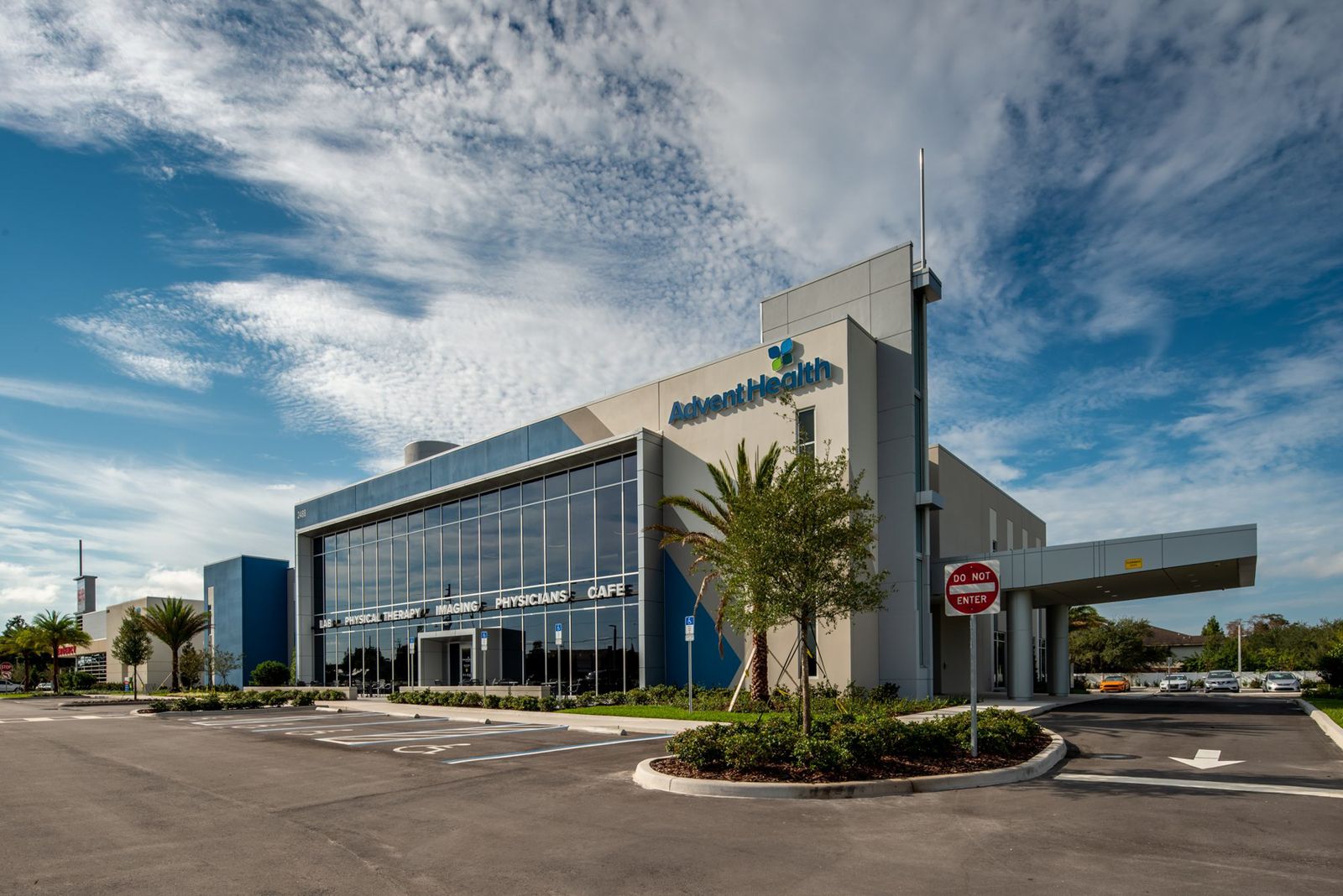
A new medical office building is built to be understood from the street in a matter of seconds. Patients arriving for a first appointment, referring physicians touring a new location, and the health system leaders who signed off on the project all form an opinion before anyone reaches the front desk. Capturing that first impression is the real assignment when a commercial healthcare facility opens, and it calls for a different approach than a house or a resort.
The building in these frames is a two story outpatient facility wrapped in a glass curtain wall, with a covered patient drop off, an open parking field, and a tidy landscape buffer between the lot and the entrance. Every design decision is meant to read as competent and calm. The photographer's task is to turn that intention into images a marketing team can use across a website, a leasing package, a contractor portfolio, and a press release, all from a single visit.
Why Medical Office Exteriors Are Their Own Discipline
Commercial healthcare architecture sits where real estate, corporate branding, and public service overlap. A single exterior photograph may need to serve several audiences at once, and each one looks for something slightly different in the frame.
- Developers and owners want the asset to look valuable, leasable, and well maintained.
- General contractors and architects want clean lines, accurate proportions, and proof of a finished build.
- Health systems and tenants want a welcoming, trustworthy face that reassures patients.
- Brokers and leasing agents want bright, generous views that hold up in a listing.
Knowing who will use the picture changes how you shoot it. A contractor values a straight, corner on view that documents the workmanship, while a health system may prefer a warmer angle that includes the entrance canopy and the path a patient actually walks.
Reading the Light on a Glass and Metal Facade
Glass curtain walls and metal panels behave like mirrors, so the sky becomes part of the building. Flat, hazy light leaves the facade looking gray and lifeless, while a sky with structured clouds gives the glass something worth reflecting. On this shoot the broken cloud cover did much of the work, adding depth above the roofline without blowing out the highlights.
Early morning and late afternoon light rakes across the panels and reveals texture that midday sun flattens. A polarizer helps manage reflections and deepens the blue of the sky, though it needs careful handling so the curtain wall does not go unevenly dark. When the schedule allows, a short twilight window can add drama, yet a clean daylight exterior remains the workhorse image for most healthcare marketing.
Composition: Giving a Corporate Building a Sense of Arrival
A medical office should feel approachable, not institutional. Composition is how you build that feeling into the frame.
- Keep verticals true. Correct converging lines in the field or in post so the walls stand straight and the building reads as solid.
- Shoot the entrance corner. A three quarter angle shows two faces of the building and leads the eye toward the door.
- Use the foreground. Fresh landscaping, a clean sidewalk, and the drop off canopy frame the approach and add depth.
- Mind the sky ratio. Give a dramatic sky room to breathe, but never let it overwhelm the structure you were hired to feature.
- Include human scale. A distant figure or a parked car helps a viewer understand the size of the facility.
A Pre Shoot Checklist for Healthcare Facilities
Access and coordination matter more on a commercial site than most clients expect. A short call with the facilities manager before the shoot prevents most surprises.
- Confirm which signage and tenant logos are final, since branding often changes late in construction.
- Ask about the cleanest parking window, usually early morning before staff and patients arrive.
- Request that construction debris, cones, and temporary barriers be cleared from view.
- Check whether any cars can be moved to open up the foreground of the lot.
- Verify that irrigation has run and walkways have been swept.
Working Around Signage, Traffic, and Access
Active medical sites rarely pause for a photographer. Delivery trucks and patient traffic keep moving, and regulatory signage such as accessible parking markers and directional signs is part of the real building. Rather than fight these elements, work with them. Time your frames between traffic, shoot from angles that keep required signs legible where they matter, and plan to remove only the temporary clutter in post, never the permanent, code required details. Waiting for a clear lane or an unoccupied drop off often separates a usable frame from a cluttered one.
Delivering Images the Marketing Team Can Use
A commercial exterior shoot is not finished at the last exposure. Healthcare clients typically need the same building in several formats, and planning for that during capture saves everyone time.
- Wide horizontal hero frames for website banners and homepage headers.
- Tighter vertical and square crops for social media and leasing flyers.
- Detail frames of the entrance, signage, and canopy for interior pages.
- A clean, retouched master with distracting temporary elements removed.
Retouching should stay honest. Cleaning up a stray cone, balancing the sky, and correcting perspective all serve the building. Inventing features that do not exist, or hiding permanent conditions, does not, and it can undermine trust with the very audiences a medical facility depends on.
A medical office building has one job in a photograph: to look like a place you would trust with your care. Every choice of light, angle, and timing should serve that single impression.
If you are opening a commercial healthcare facility, a medical office building, or another corporate property in Florida, professional exterior photography helps your project make the right first impression. Reach out through the contact page to discuss your building, your timeline, and the images your marketing team needs.