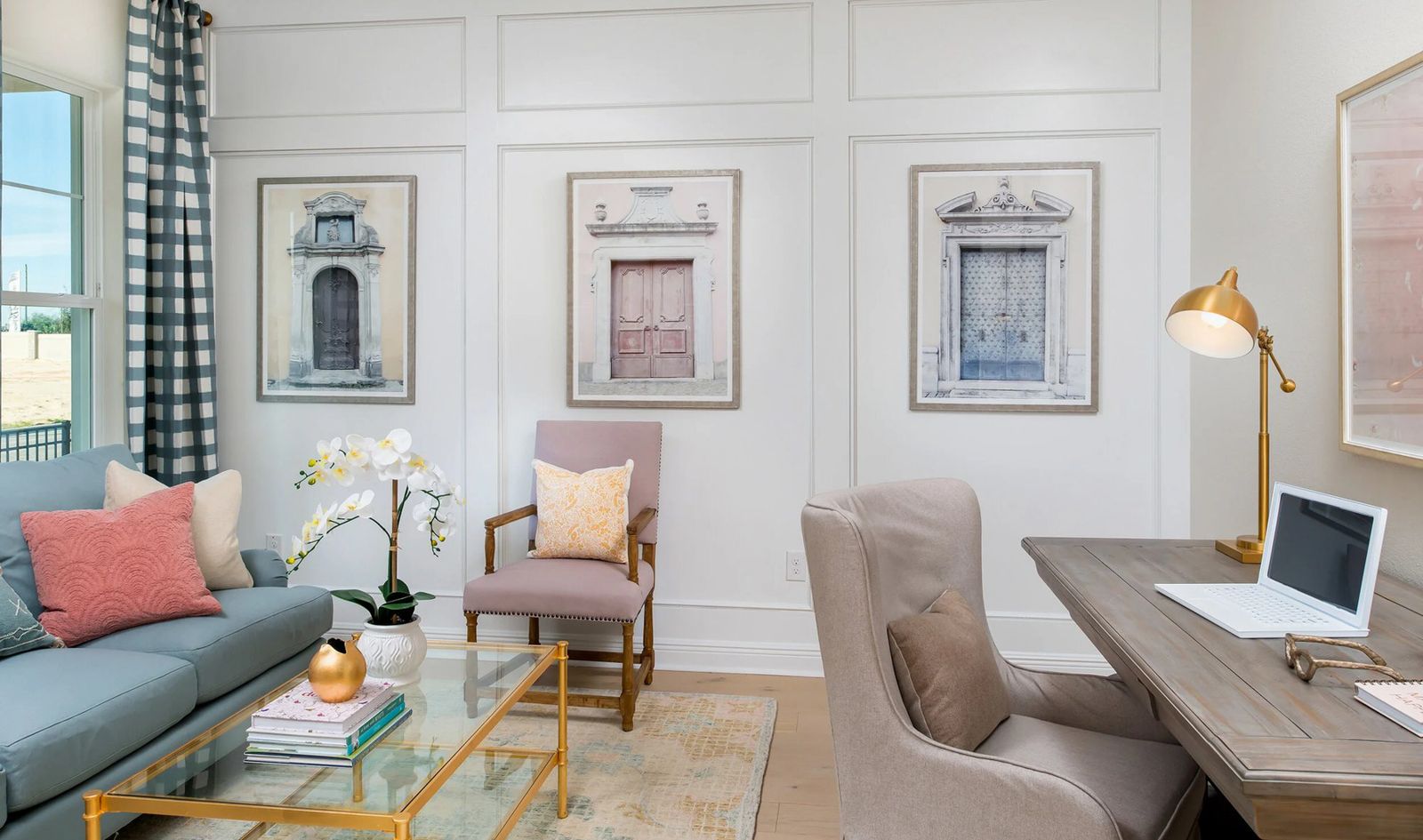
The photograph at the top of this post shows a room most listing shoots walk right past. A sitting area with a soft blue sofa and a glass coffee table fills the left of the frame. A writing desk with a laptop and a brass lamp holds the right. Three framed architectural prints hang on the paneled wall between them. It is not the kitchen, and it is not the primary suite, but it is the room a buyer pictures themselves answering email in on a Tuesday morning.
Rooms like this one usually get five minutes at the end of a shoot, if they get anything at all. That is a mistake. Dedicated work space stopped being a bonus feature several years ago, and buyers in the Florida markets I photograph now scan listing galleries looking for it. A study, a flex room, or a sitting room with a desk answers a question the main living areas cannot: where does my actual day happen in this house?
Decide What the Room Is Before You Set the Tripod
Flex rooms are ambiguous by design, and that ambiguity is what makes them difficult to photograph. The space above is doing three jobs at once: sitting room, home office, and bright pass-through near the front of the house. Give equal weight to all three and you get a frame that reads as clutter rather than as a room.
Pick the dominant story first. Here the desk and the art wall carry it, so the composition treats the seating group as supporting context instead of as the subject. Walk the room before you unfold anything, and ask which single arrangement of furniture tells a buyer what this room is for. That decision drives every other choice you make.
Composing a Room With Two Centers of Gravity
A conventional interior frame has one anchor. A flex room has two, and the seating cluster and the desk will fight each other unless you establish a hierarchy between them.
Two approaches work reliably. The first is the wide two-thirds frame used in the hero image, where the desk occupies the right third, the seating fills the left, and the wainscoting ties them together across the back wall. The second is a tighter vignette: desk, chair, lamp, and a single piece of art, shot at a longer focal length so the room falls away behind it. Deliver both. Listing sites reward the wide frame, and design portfolios reward the vignette.
Camera height matters more here than in most rooms. Set the lens between forty and forty-eight inches off the floor. Go higher and the desktop flattens into an empty plane of wood. Go lower and the sofa arm swallows the bottom of the frame.
Framed Art, Glass, and the Glare Problem
The three prints on the accent wall are the visual spine of this photograph, and glazed artwork is the single most common thing that ruins a room like this one. Glass picks up the window, the ceiling fixture, and occasionally the photographer.
The fix is angular, not digital. Shift the tripod two or three feet laterally and watch the reflection travel across the glass. There is almost always a position where it slides off the frame entirely. A slightly angled composition with clean glass beats a dead square one with a window reflected in every print.
When the reflection refuses to move, bracket a second exposure with the room lights off and blend the art panels in during post. Do not simply clone it out. The texture of the print goes flat when you do, and an art director will catch it.
Lighting a Room That Only Has One Window
Studies are frequently interior rooms served by a single window, and that window usually sits behind or beside the desk. The exposure problem is familiar: a blown window, a correctly exposed wall, and a desk surface sitting three stops under both.
Work the ambient light first. Open the drapes fully, switch off any overhead cans throwing yellow pools onto a white ceiling, and expose for the room rather than the view. Then add one bounced strobe or a large scrim to lift the shadow side of the desk. A single head aimed into the ceiling above and behind the camera does most of what this kind of room needs.
Mixed color temperature is the second trap. The brass desk lamp is warm, the window is cool, and the recessed fixtures land somewhere in between. Decide which source defines white for the frame, gel or kill the ones that disagree, and correct the rest selectively instead of dragging one global slider across the file.
Styling That Actually Photographs Well
Most of what makes these rooms work happens before the shutter moves. A short, disciplined pass through the space pays for itself:
- Leave the laptop open and angled toward the window with the screen dark. A closed laptop reads as a prop, and a lit screen blows out.
- Stack two or three books with the spines facing camera. A single book squared to the desk looks staged.
- Remove cords, chargers, and power strips completely. A visible cable is the fastest way to make a styled room look like a used one.
- Keep one plant or one arrangement of fresh flowers in frame, not three competing for attention.
- Level every frame on the wall, then check your verticals again in live view.
- Angle the desk chair fifteen to twenty degrees off square. A chair pushed straight in reads as unused furniture.
A Repeatable Shot List for Flex Rooms
Running the same sequence in every study keeps coverage consistent and keeps the shoot moving on a tight schedule.
- A wide establishing frame from the doorway showing how the room connects to the floor plan.
- The primary two-thirds composition balancing the seating group against the desk.
- A tighter desk vignette at a longer focal length with the art wall softened behind it.
- One detail frame of the art, the lamp, or the millwork that gives the room its character.
- A reverse angle toward the window, exposed for the view, so the buyer understands the light.
A buyer rarely falls for a house in the kitchen. They fall for it in the smallest room, the one where they can already picture themselves working.
Flex rooms and studies are where a thorough listing gallery separates itself from a rushed one. If you are marketing a luxury property, a model home, or a completed design project in Central Florida and want that coverage handled properly, get in touch and we can build the shot list your project actually needs.