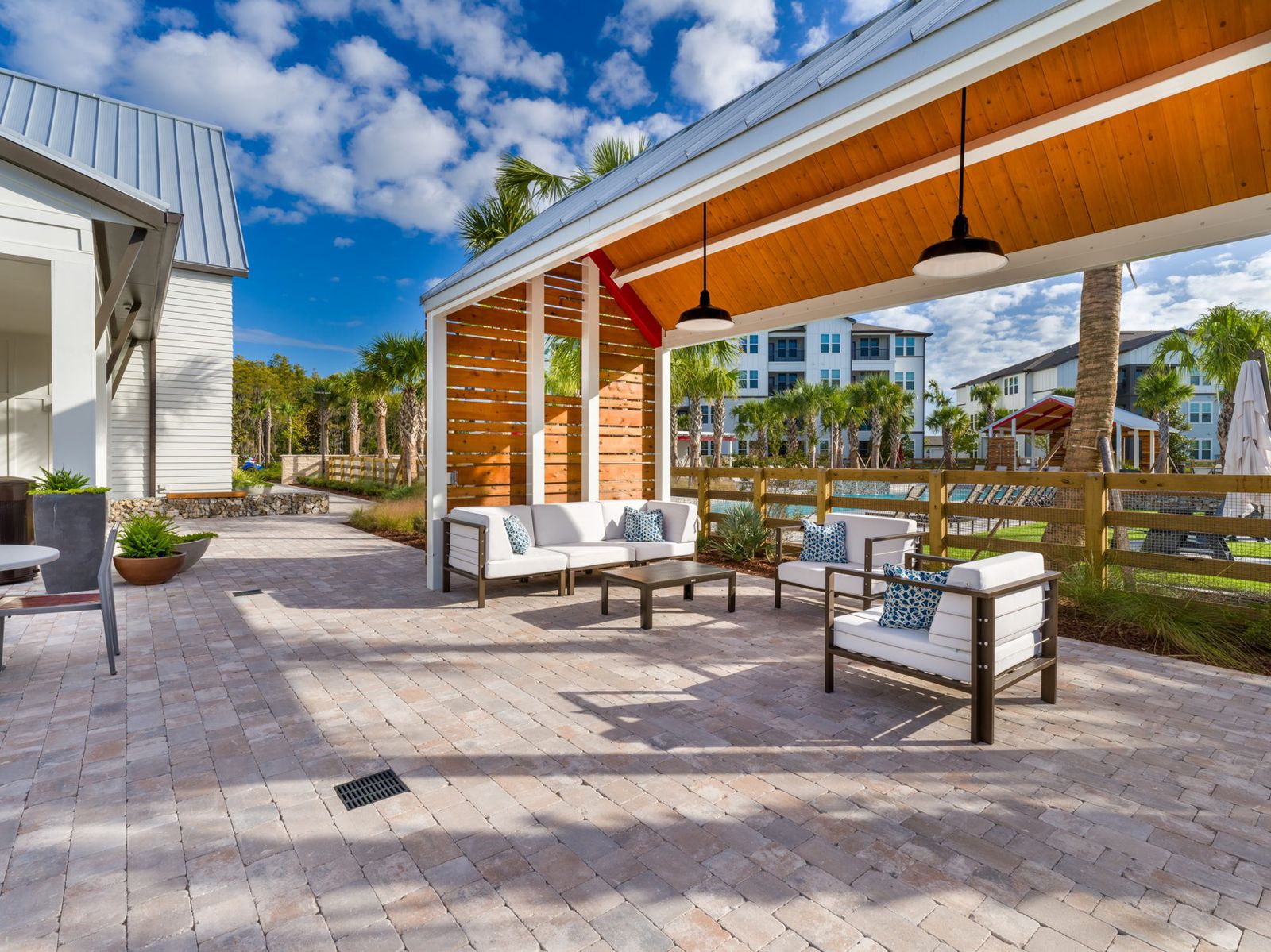
A covered patio with a sofa, two lounge chairs, and a low table sits empty under a cedar-lined roof. Beyond a wood rail fence, a pool catches the afternoon light, and a row of three-story apartment buildings frames the background against a bright Florida sky. Nobody is sitting in this space, and that is exactly the problem a photograph like this has to solve: convincing someone scrolling through a leasing website that they can picture themselves here.
Amenity space photography is its own discipline within commercial and architectural work. Unlike a hotel lobby or a finished interior, an outdoor lounge at an apartment community is almost never photographed with people in it, and it rarely has the dramatic architecture of a hotel atrium. The entire job is to make an empty patio feel like a place worth living near, using nothing but light, staging, and composition.
Why the Amenity Shot Carries the Leasing Decision
Most renters choose which communities to tour before they ever leave their couch. They scroll a gallery of unit interiors, a clubhouse, a pool deck, and an outdoor lounge like this one, and they decide in seconds whether the property matches the life they are picturing for themselves. A patio photograph that looks flat, shadowed, or sterile reads as an afterthought. One that looks warm, shaded, and social reads as a place where residents actually spend their evenings, and that impression is often the difference between a scheduled tour and a scroll past.
Reading the Space Before Setting Up
A covered outdoor space like this one behaves differently than either a fully open patio or a fully enclosed room, because the roofline creates its own shade pattern that shifts through the day. Before setting up a single frame, I walk the space at a few different hours and check:
- Where the roof's shade line falls at different times, and when it fully covers the seating without harsh edges cutting across the furniture
- Whether the pool and buildings beyond the fence read as an asset in the background or a distraction that needs to be minimized with angle and depth of field
- How the wood slat privacy screen and cedar ceiling interact with direct sun, since both can create distracting stripes of light if photographed at the wrong hour
- Where property maintenance items, hose bibs, trash cans, faded cushions, tend to collect just outside the frame
Styling an Empty Patio So It Reads as Lived-In
Because these shoots almost never include residents, the styling has to do the work that people would otherwise do. Straightening cushions, squaring the coffee table to the sofa, and adding a small styling detail, a stack of books, two glasses, a folded throw, gives the eye something to rest on and signals that the space gets used. I coordinate with the property manager ahead of time so cushions are clean, furniture is undamaged, and the pool beyond the fence is freshly serviced, since all three show up clearly in a wide frame like this one.
Timing the Light for a Covered Space
A covered lounge photographs best in the hour or two after the sun clears the roofline enough to light the surrounding pavers and pool without spilling harsh direct light across the seating itself. Midday sun under a low roof creates a cave-like shadow that swallows the furniture, while the sky and buildings beyond blow out. I bracket exposures so the shaded seating area, the sunlit pavers, and the bright sky all hold detail, then blend them so the final image looks like what a resident would actually see walking up, not like three separate exposures forced together.
Composition That Balances Shelter and Openness
- Shoot from just outside the covered area looking in, so the roofline, the seating, and the open pool deck beyond all register in a single frame
- Keep the wood slat screen in frame on one side to establish the sense of a defined, private lounge rather than an open walkway
- Let the pool and apartment buildings sit softly in the background, close enough to signal an active community, distant enough that they support the patio instead of competing with it
- Capture a second, tighter frame on the seating and pendant lighting alone, useful for a leasing brochure or a social media crop where the wider context is not needed
Delivering Images That Work Across the Leasing Funnel
A single amenity shoot needs to serve a leasing website gallery, a virtual tour, and printed materials for the leasing office, so I deliver wide horizontal frames for the website, vertical crops for mobile browsing and social stories, and full resolution files for print. Every image is color graded to match the rest of the property's gallery, so this patio, the clubhouse interior, and the unit photography all read as one consistent brand instead of three separate shoots.
An empty patio only sells a lifestyle if the photograph makes someone want to be the one sitting in it.
If you manage a multifamily property and need photography that captures your amenity spaces the way residents actually experience them, get in touch to talk about scheduling a shoot around your community's light and traffic patterns.